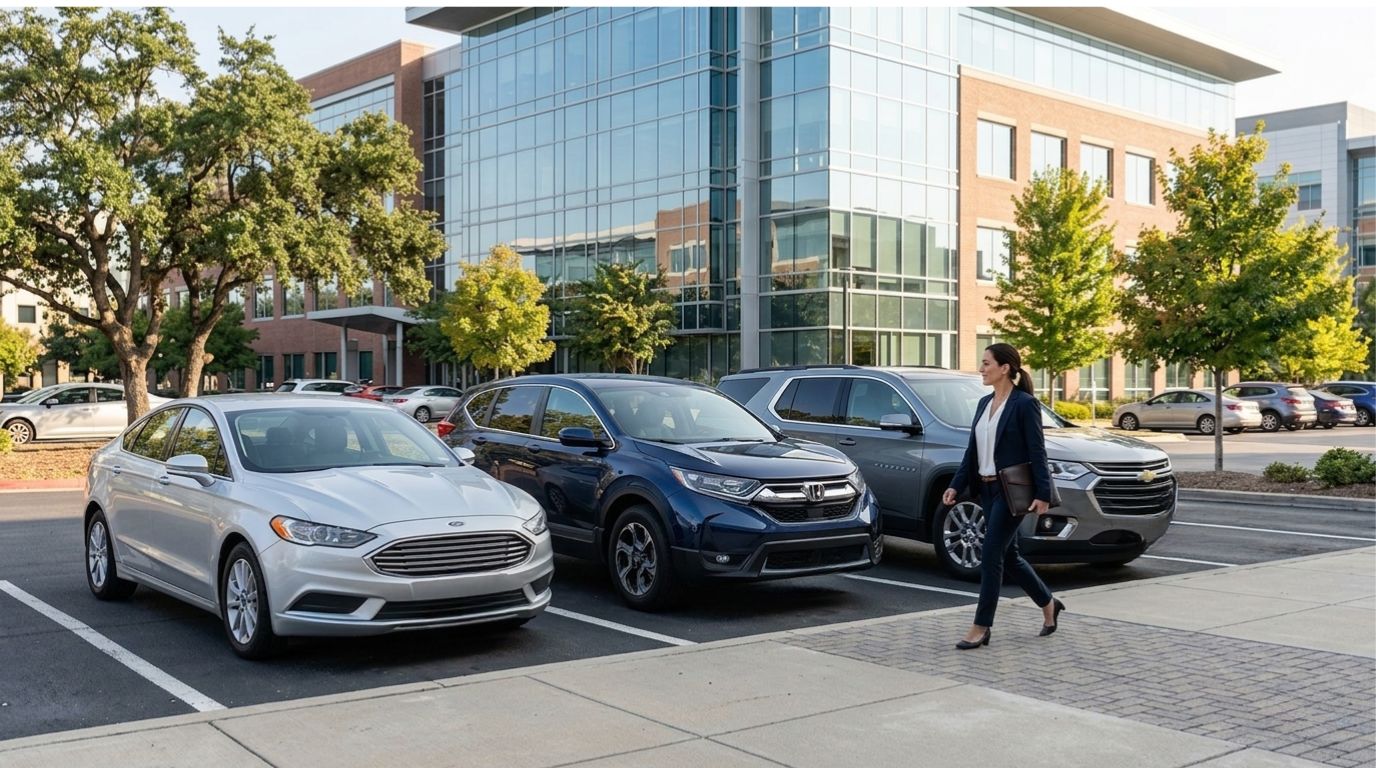
The more your business depends on vehicles, the more miles count, and the more money counts. You may have ten delivery vans, a sales fleet that operates across state lines, or executive company cars, but what you have is an asset, not just a means of transportation.
And one of the most brilliant financial moves you can make regarding those assets = Lease your fleet strategically.
However, not every fleet leasing is the same. The right structure will assist you in lowering the cost of entry, lowering the risk, and scaling quickly. The mistaken one? It may keep you in a bind with aging cars, unforeseen costs, and complicated logistics.
Get it right, and your vehicles become strategic assets. Get it wrong, and they become liabilities with wheels. In this guide, we break down the smartest, most cost-effective ways to lease fleet vehicles in 2025 – so your business keeps moving, profitably.
Why Lease Fleet Vehicles in the First Place?
Before we dive into the how, let’s cover why. Leasing isn’t just about lower monthly payments – it’s about business agility.
Key advantages of leasing your fleet include:
- Lower capital investment compared to purchasing
- Predictable monthly expenses for better cash flow management
- Access to newer, more fuel-efficient vehicles
- Fewer maintenance costs and breakdowns
- Easier vehicle turnover and scalability
- Potential tax benefits depending on the lease structure
Briefly, leasing allows you to invest your funds in other areas of business, be it staffing, advertising, or opening new facilities, and still not compromise the performance and reliability of your vehicles.
The Best Fleet Leasing Models Explained: Which Strategy Fits Your Business?
When it comes to fleet leasing, there’s no universal “best” option – only the best fit based on your usage, goals, financial strategy, and level of fleet control you need.
Operating Lease (Also known as True Lease or Fair Market Value Lease)
It is the most customizable and popular leasing arrangement for commercial fleets. An operating lease is basically a period of renting the vehicle, which is usually between 24 to 60 months with no ownership.
Best for:
- Businesses that want to update vehicles regularly
- Companies focused on cash flow, lower upfront costs, and tech upgrades.
- Fleets operating in urban, high-visibility settings (where image and branding matter)
Key Advantages:
- Lower monthly payments
- Avoids residual value risk
- Often off-balance-sheet (favorable for accounting)
- Maintenance and support are often bundled.
Strategic Insight: Operating leases are best suited to sales departments, delivery companies, and any company where a high turnover of vehicles and image is of paramount importance. When your vehicles are covering average miles and must remain up to date, this form of lease allows you to stay agile without tying up capital.
Finance Lease (Capital Lease)
In this model, you’re leasing the vehicle, but with a clear path to ownership. Consider it as financing with the advantages of a lease structure. You account for the vehicle as a depreciable asset
Best for:
- Businesses with heavy-duty vehicles or custom builds (e.g., refrigeration, trades)
- Firms are planning to keep vehicles long-term.
- High-mileage applications (e.g., intercity logistics)
Key Advantages:
- Option to own at the end of the lease term
- Depreciation may be tax-deductible.
- More cost-effective over the long run for heavy use
Strategic Insight: A finance lease is a good option when your business needs control of your equipment over a long period and you are installing specialist vehicle upfits or equipment, and want to safeguard your investment and not have to repeat the leasing process
Sale and Leaseback
Already own your fleet? Sale and leaseback enables you to liberate capital by selling your existing vehicles to a leasing firm, and then leasing them again on new terms.
Best for:
- Businesses needing fast capital (without losing vehicles)
- Companies are looking to simplify fleet ownership and management.
- Mid-sized businesses are moving toward full outsourcing.
Key Advantages:
- Instant capital injection
- Keeps the fleet operational
- Removes depreciation and resale burden
- Streamlines budgeting with fixed lease terms
Strategic Insight: This model is not only applicable to companies that are in financial binds, but also to those growing companies that are interested in reinvesting in people, property, or technology and getting rid of the burden of vehicle management.
What Affects the Cost of Leasing Fleet Vehicles?
Just like no two businesses are alike, no two lease quotes will be either. Here are the main factors that impact fleet leasing costs:
| Factor | Impact on Lease Cost |
| Vehicle type | Sedans, vans, EVs, and trucks have different base costs |
| Lease term & mileage cap | Longer terms or high-mileage use can raise rates |
| Upfit or customization | Modifications add upfront and residual costs |
| Maintenance inclusion | Full-service leases include maintenance & repairs |
| Residual value estimates | Higher predicted resale = lower lease payments |
| Credit profile | Business credit affects lease approval and rates |
Pro tip: To minimize the hidden costs and maximize the ROI in the long term, it is a good idea to work with a fleet leasing partner who knows your industry.
When Is the Right Time to Lease Your Fleet?
Timing matters. Here’s when it makes sense to lease:
- When scaling rapidly, but want to avoid a large upfront investment
- When your existing fleet is aging and costing too much in repairs
- When you want to take advantage of EV tax incentives or fuel savings
- When cash flow needs to remain flexible during uncertain economic periods
Leasing can also help reduce downtime, since leased fleets tend to be newer and more reliable, your vehicles stay on the road, not in the shop.
What About Electric or Hybrid Fleets?
With sustainability as the new brand identity and compliance, the EV fleet leasing is gaining momentum at an industry-wide level.
Fleet leasing makes it easier to:
- Try new EV models without long-term commitment
- Tap into tax rebates or carbon credit incentives.
- Meet corporate ESG targets and green fleet goals.
At Corporate Fleet, we help businesses transition to electric step by step – from vehicle selection to charging infrastructure planning.
What Makes a Great Fleet Leasing Partner?
Choosing the right vehicles is one thing. Choosing the right partner to manage them? That’s where the real value lies.
The best fleet leasing partner should offer:
- Flexible lease structures for your usage
- National vehicle sourcing and delivery
- Fleet tracking, telematics, and real-time reporting
- Full-service maintenance plans
- End-of-lease support (including resale or returns)
- Dedicated account management
At Corporate Fleet, we are not just a leasing company; we are a strategic partner. We save your time, costs, and make fleet management easy at the beginning and at scale.
The Smartest Way to Lease Fleet Vehicles? Make It Work for You
There’s no single “best” way to lease fleet vehicles – but there is a best way for your business. Whether that’s an operating lease for predictable upgrades, a finance lease for long-term value, or a sale-and-leaseback to unlock capital, you have options. The key is knowing which model aligns with your goals, usage patterns, and growth plans.
And the real advantage? Partnering with a fleet provider who understands the big picture, not just the paperwork.
At Corporate Fleet, we tailor every lease structure to fit your business, not the other way around. From national vehicle sourcing to EV transitions, telematics to tax strategies – we make sure your fleet isn’t just moving, but moving you forward.
Let’s talk about building a fleet that drives savings, flexibility, and results – one smart lease at a time.